Tuesday, November 14, 2017

I've just about had it with U.S. restriction practice

Reaction GIF: angry, sweating, John Goodman


Today, I got another restriction requirement in a US National Stage application.  We entered the national stage under 371, and the Examiner applied the correct Unity of Invention rules and everything.  

So why am I pissed off?

Because all the claims of this application HAD ALREADY BEEN SEARCHED IN THE INTERNATIONAL STAGE.  The only amendments I made upon entry in the USPTO were to remove multiple dependency.  Otherwise, the claims of the US application are identical to those of the PCT.

The application has, effectively, ALREADY BEEN EXAMINED.  Why is this Examiner creating more work for himself?  It MAKES NO SENSE.  He's costing my client money that they shouldn't have to spend.  He's dragging out the prosecution process.  FOR NO REASON.

Sure, maybe he gets the case off his desk quickly by issuing a restriction.  Except NOT, because he had to go through the work to draft the restriction requirement (and election of species - did I mention that there's an election of species requirement)?  It would have been faster just to pump out an action on the merits based on the IPER.  He's got the art.  He's got the form paragraphs.  A reasonably bright fifth-grader could write that office action.

Who asked for this?  Who thought this was a good idea?  It's not like Examiners are sitting around with nothing to do.  Last I checked, it still takes more than the target 14 months for the USPTO to pick up a case.

I checked the MPEP, and do you know what it tells Examiners to do in this situation, in US national stage applications where no unity of invention objection has been raised in the international phase?

NOTHING.

It doesn't say that the U.S. Examiner may substitute her judgment for that of the international examiner.   It doesn't say that she shouldn't.  It doesn't provide ANY GUIDANCE AT ALL about how to deal with what, in my experience, is VERY common situation.

Yeah, it generates fees, by forcing applicants to file multiple applications.  But no, that's circular, because the extra fees go to pay examiners to examine all of those extra applications.  If they didn't have so many extra applications to examine, they WOULDN'T NEED ALL THE EXTRA FEES.

ugh.

Is it time to start drinking yet?


Thursday, May 4, 2017

Patent Rights in South America? Not so much.

The U.S. Trade Representative just released a report listing countries that have shaky IP regimes.  The list includes, among others: 

Argentina
Chile
Venezuela
Bolivia
Brazil
Colombia
Ecuador
Peru

Let's compare that to a map of South America:
map-of-south-america.jpg 
Wow.

Maybe more interesting, under the circumstances: the South American countries that didn't make the list:

Guayana
Suriname
French Guiana
Paraguay
Uruguay.

Would not have predicted that.  Anyone making a lot of patent filings in French Guiana?

BTW, also on the list of problem countries for IP:

Canada.

Go figure.  

Sunday, April 30, 2017

Federal Circuit: Giles Who?

The Federal Circuit in Nichia v. Everlight has just (arguably) made it even harder to obtain a permanent injunction in a patent case.

 What is the patent right again?  Oh yeah - this:-

"It is no longer debatable what the patent right is. As I just explained, the Supreme Court told the country in 1852 in Bloomer v. McQuewan that it consists altogether in the right to exclude others – and that is all it is. It is not an ambiguous “exclusive right”; it is a simple right to exclude others. Period."

An Interview with Judge Giles S. Rich, 9 FED. CIR. B.J. 75 (1999). (Hat tip to Prof. Crouch)

Reaction GIF: no, disappointed, Jonathan Banks, Mike Ehrmantraut, Breaking Bad

Friday, January 15, 2016

I Can Prove that the Drafters of the AIA Were High When They Wrote the Statute

Only somebody who was high would write this this way:

35 USC 102(d) PATENTS AND PUBLISHED APPLICATIONS EFFECTIVE AS PRIOR ART.
--For purposes of determining whether a patent or application for patent is prior art to a claimed invention under subsection (a)(2), such patent or application shall be considered to have been effectively filed, with respect to any subject matter described in the patent or application --
(1) if paragraph (2) does not apply, as of the actual filing date of the patent or the application for patent; or
(2) if the patent or application for patent is entitled to claim a right of priority under section 119, 365(a), 365(b), 386(a), or 386(b), or to claim the benefit of an earlier filing date under section 120, 121, 365(c), or 386(c) based upon 1 or more prior filed applications for patent, as of the filing date of the earliest such application that describes the subject matter.

Wow.

OK, let's unpack this a little bit. 

This section says a patent or application is prior art (1) if paragraph (2) does not apply, when X; or (2) when Y.  That's just crazy.  You have to get all the way to then end of section (d)(2) to figure out if (d)(1) applies.  There's no need to structure it this way:  They could just as easily say A patent or application is prior art (1) when Y; or (2) if Y does not apply, when X.  Although it's remotely possible that the people who were drafting this were equipped with computers without a backspace or delete key, I think it's much more likely that they were high.  They started writing, and the words poured forth.  I'm guessing it was meth - hypergraphia is a known side-effect of excessive consumption of uppers.


They could have said it this way:  

For purposes of this statute, the effective filing date of a patent or application is the earliest of (1) the actual filing date of the patent or application; or (2) the earliest filing date of a prior application to which the patent or application is entitled to claim priority.


We cut out the listing of the sections under which you can claim priority, which is exhaustive and so is unnecessary.  We also cut out the reference to an "application that describes the subject matter," which is subsumed within the concept of entitlement to claim priority, and so is likewise superfluous.

Sunday, January 3, 2016

PTO Goes Outside of Agency for Head of Dallas Office

Meet Hope Shimabuku, USPTO Reg. No. 57,072, your new Director of the Dallas office of the USPTO.  Ms. Shimabuku is a  mechanical engineer who comes the USPTO from Xerox; her prior employment includes stints at RIM, Dell, and P&G, and had a couple of law firm gigs.  She's a graduate of UT (Austin) and SMU law school (don't mess with Texas).  Details at Dallas News.

Interesting choice to pick somebody from outside the USPTO with clear regional ties.  


Friday, July 17, 2015

Best IP-related Article of the Week

"Copyright Law Was Not Created To Protect People From Fatwas."  Link here.  

Interesting and cogent primer on the DMCA.

Wednesday, July 15, 2015

Vox: "The Patent Troll Problem is Getting Worse"

Link here.

Issues:  
- statistics are based on increased suits by "Non-Practicing Entities" without distinguishing between the different flavors (like, for example, universities as opposed to "patent monetization entities").

- increased suits are noted, without any analysis of where this is coming from.  Maybe increased economic activity leads to more infringement, which provokes more suits?  No way to tell from these data.  

- And anyway, why are patent suits inherently evil?  What are patentholders supposed to do, ask nicely?  I mean, of course they are, but when the infringer tells them to pound sand, what then?

 
Should probably have added quotes, like this:

The "Patent Troll" "Problem" is Getting "Worse."

Monday, May 11, 2015

I had this crazy dream

In my dream, the USPTO had a rule that penalized applicants by cutting their PTA if their deadline fell on a weekend, but they didn't respond until the following business day.  Which is, of course, totally Kosher under the rules.

So in my dream, the rule penalizing applicants was overruled by the Courts.  And then, in my dream, it took FOUR YEARS for the USPTO to change the way its computers calculated PTA to comply with the decision.

FOUR YEARS.  

And then you know what happend?  The USPTO gave everybody four extra years of patent term, because of the delay in fixing the problem.

In my dreams.

Friday, March 27, 2015

Quick copyright updates

1. A US District Court judge in New York has dismissed the three-year-old copyright infringement case against the Beastie Boys (see opinion here).  Plaintiff TufAmerica had accused the Beasties of sampling TroubleFunk's "Say What" and "Lets Get Small" without permission.  According to the court, TufAmerica lacked standing because they didn't have an exclusive license from all three members of TroubleFunk.


2. IKEA is being sued (story here) for alleged copyright infringement by Emeco.  According to plaintiffs, IKEA copied an Emeco chair without permission.  The allegedly infringing chair is on the right, and the copyrighted chair is on the left.  So this one should be settling shortly.


3.  The US District Court for the Northern District of California has heard arguments in a suit challenging Warner/Chappell's copyright on the song "Happy Birthday to You," which is not scheduled to expire until 2030.


Monday, March 23, 2015

RZA has an idea. I have a better one.

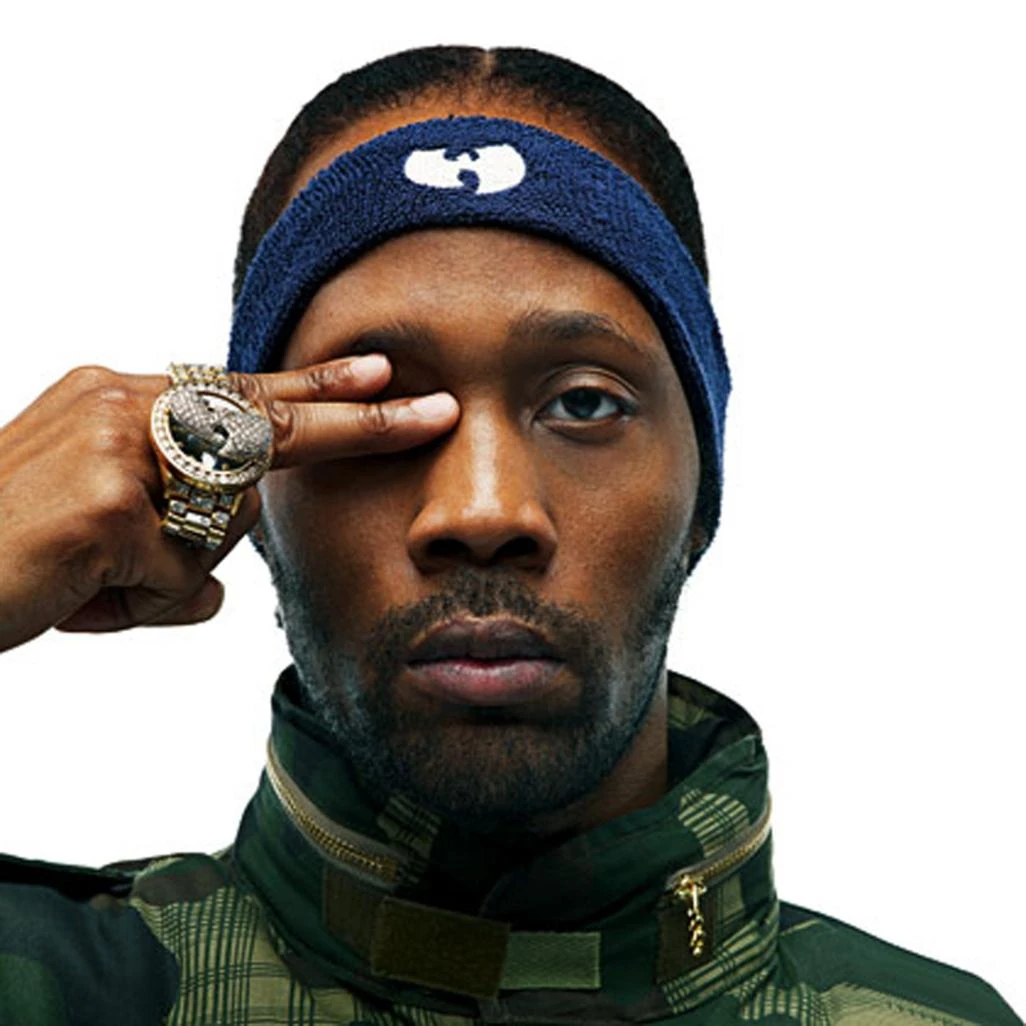
Wu-Tang Clan founder RZA has spoken out about the recent "Blurred Lines" copyright infringement verdict.

He's got an interesting solution for solving the problem of musicians sampling others' works: a a 50% statutory cap on royalty payments.

I have a better idea:  how about negotiating a license before you use somebody else's recording in your work, instead of just ripping them off and waiting to get sued?

Just a thought.

Thursday, March 19, 2015

Well, that pretty much settles that controversy.

Somebody doing a little historical research in the USPTO database (article here) has uncovered the original patent for perforated toilet paper, thereby answering the "over v. under" question once and for all.


And the verdict is...


 As it should be.

Wednesday, December 10, 2014

That's some highfalutin' lawyer talk, right there. That's what that is.

In case you missed it, the Supreme Court has not only denied Sigram Schindler's petition for cert in its appeal from the USPTO (you can read the petition here); it's considering sanctions against the attorney who filed the petition.

Here's the question presented:
“Does the US Constitution, in legal decisions based on 35 USC §§ 101/102/103/112,
• require instantly avoiding the inevitable legal errors in construing incomplete and vague classical claim constructions – especially for “emerging technology claim(ed invention)s, ET CIs” – by construing for them the complete/concise refined claim constructions of the Supreme Court’s KSR/Bilski/Mayo/Myriad/Biosig/Alice line of unanimous precedents framework,
or does the US Constitution for such decisions
• entitle any public institution to refrain, for ET CIs, for a time it feels feasible, from proceeding as these Supreme Court precedents require – or meeting its requirements just by some lip-service – and in the meantime to construe incomplete classical claim constructions, notwithstanding their implied legal errors?
Wow.


Monday, December 8, 2014

Did not see that coming (Troll edition)

The US District Court for the District of Nebraska has ruled (decision here) that the state of Nebraska must pay $725,000 in fees and costs to NPE "MPHJ Technology Investment LLC" after the state AG sent cease and desist orders to MPHJ pursuant to a suit filed under the state's anti-patent-trolling statute.  According to the Court, the state "violated 42 USC 1983 and the First, Fifth, and Fourteenth Amendments to the U.S. Constitutuion."

Ouch.


Monday, December 1, 2014

Lies, damn lies, and statistics

From the FY 2014 USPTO Annual Report (link here):  

Average patent pendency is down (to almost 2 1/2 years), but average time to first OA is flat (at about 1 1/2 years).


The backlog of unexamined applications stands at over 605,000, which is down almost 20% (!) from 2009.

Maintenance fees account for over 45% of FY 2014 patent revenue.

Total patent fee collections in FY 2014: $2.9B.


Friday, November 21, 2014

Congressional Hearings on USPTO Telework: Farce or Travesty?

A joint hearing held by the House Oversight and Government Reform Committee and the House Judiciary Committee heard testimony this week regarding telework at the USPTO (story here).

I have no doubt that some examiners are gaming the system.  It has always been thus.  

That said, here's an interesting fact:  in 2013, House members drew a salary of $174,000. Not bad, considering the median household income in 2013 was right around $52K.  But in 2013 the House was in session for 113 days.  That works out to an annual salary, for a 50-week year of five-day work weeks, of just under $385,000.  

But who knows how much of that time they actually spent on the people's business?  Fact is, nobody is keeping track of the hours that our representatives actually work.  They work for US, the taxpayers. How are we supposed to know if we're getting the work that we're paying for?  And I mean working on the stuff we send them to Washington to do, not working on raising money so they can get re-elected.  They can do that on their own time.  

So I have a suggestion for the House: no more hearings about patent examiners' work habits until representatives are willing to be accountable to us for their own work habits.


Wednesday, November 19, 2014

Wrigley, WTF?

According to this story in Above the Law, Wrigley (the chewing gum people) is opposing the application of Perfetti (the Mentos people) to register the mark "WTF."  Perfetti, which likes slightly off-center advertising, apparently plans to use "WTF" and the phrase "What The Fresh" to market its minty products.  Wrigley argues that consumers will confuse these marks with its own "Winterfresh" gum.


Yeah.  That's what I think of when I hear "WTF."


Wednesday, November 12, 2014

What's the Spanish word for "chutzpah?"

"A former executive with Spain's main copyright organization has been sentenced to prison for spending €40,000 ($50,000) in brothels using a corporate credit card, with a judge describing as "nonsense" the man's claims that the visits were work-related."

Full article here


Thursday, October 30, 2014

Likelihood of Confusion, Part II

According to this story at Bloomberg.com, Apple is going to call its watch the "Apple Watch" rather than "iWatch" because the European trademark for "iWatch" is owned by Dublin-based Probendi.

According to the story, Probendi plans to market its own smartwatch and call it iWatch.  Now here's the confusing part: the iWatch is going to be an Android watch.  


Monday, October 27, 2014

Pizza flavor not subject to Federal TM protection

Last week, the U.S. District Court for the Southern District of Texas (Galveston) issued a decision (link here) holding that the flavor of pizza is not subject to trademark protection, because (a) it's not distinctive, and (b) it's functional.

As to the second reason: I agree completely. 

As the first: it's Texas pizza.  How can they tell?


Wednesday, October 22, 2014

Are tweets subject to copyright?

Emma Pauw, "social media writer" at We Talk Social (http://www.wetalksocial.co.uk/) asks the question in a piece in B2C (link here).

Actually, the question she asks is "Can You Copyright a Tweet?"

Under the Berne Convention, copyright vests upon creation. So you don't have to "copyright" anything.  It is, or it isn't.  Now, if you want to enforce your copyright, you may have to register your work with a government agency - in the U.S., the Copyright Office is part of the Library of Congress. If you want to sue for copyright infringement in U.S. District Court, you need to register it with the Copyright Office.  But the registration doesn't "copyright" the work.  

That's not the interesting part. 

Under U.S. law, copyright "subsists ... in original works of authorship fixed in any tangible medium of expression, now known or later developed, from which they can be perceived, reproduced, or otherwise communicated, either directly or with the aid of a machine or device."  17 USC 102(a).

A tweet clearly can be an "original work of authorship."  But it doesn't have to be.  Let's assume that it is. (For a serious discussion of this issue, check out this post from WIPO).

A tweet "can be perceived, reproduced, or otherwise communicated...with the aid of a machine or device."  

The question is:  is a tweet "fixed in [a] tangible medium of expression?"  I say "yes," because if it's possible to copy a tweet, (and it clearly is), then it's "fixed" enough to qualify.  Put another way, I don't know of anything that can be copied exactly, that's not  considered fixed in a tangible medium of expression.  

And of course, if you want to sue somebody for infringing your copyrighted tweet, you have to send it to the Copyright Office, which means that you have to "fix" it so you can submit it. So that's that.

Should you bother?  Probably not.